
Reading time: ~18 minutes
Audience: Founders, CMOs, and growth teams across the USA, UAE, Canada, Australia, Germany, Europe, Indonesia, and Asia.
Table of Contents
- Introduction
- AI-Powered Search Is Redefining SEO
- AEO and GEO Will Become Essential
- AI-Driven Marketing Automation
- Social Search Is Becoming a Major Discovery Channel
- Short-Form Video Will Continue Driving Attention
- Digital Marketing Trends in the USA
- Digital Marketing Trends in Europe and Germany
- Digital Marketing Trends in the UAE and Middle East
- Digital Marketing Trends in Asia and Indonesia
- Meta Ads and Google Ads Are Becoming More Automated
- Conversion Rate Optimization Will Become More Important
- First-Party Data and Privacy-First Marketing
- Personalization Will Move From Basic to Predictive
- AI + Human Expertise Will Beat Generic AI Content
- What Should Businesses Do in 2026?
- Frequently Asked Questions
- Conclusion
Introduction: Digital Marketing Is Entering a New Era
Digital marketing in 2026 is moving from traditional search and manual campaign management toward AI-powered discovery, conversational search, automation, social commerce, personalization, and measurable customer experiences. Businesses that combine high-quality content with AI visibility, strong UX, first-party data, and performance advertising will be better positioned to attract and convert customers across global markets.
The digital marketing landscape is changing faster than most businesses realize.
A few years ago, a typical customer journey looked relatively simple:
Google Search → Website → Product/Service Page → Conversion.
In 2026, that journey can look very different:
AI Search → Social Video → Creator Recommendation → Website → WhatsApp/Chat → Purchase.
Customers may discover a brand through Google AI Overviews, ChatGPT, Instagram, YouTube, TikTok, Reddit, creators, online reviews, or conversational shopping experiences before they ever visit the company’s website.
Google has already expanded AI Overviews to more than 200 countries and territories and more than 40 languages, including Arabic and Urdu. Google also reports that AI Overviews are increasing Search usage for the types of queries where they appear.
This means businesses cannot rely exclusively on traditional SEO anymore.
They need a broader search visibility strategy that includes SEO, Answer Engine Optimization (AEO), Generative Engine Optimization (GEO), social search, paid media, content authority, and conversion-focused UX.
This guide explores the most important Digital Marketing Trends 2026 and explains how businesses in the USA, UAE, Canada, Australia, Germany, Europe, Indonesia, and other global markets can adapt.
1. AI-Powered Search Is Redefining SEO
AI-powered search is one of the biggest Digital Marketing Trends 2026 because customers increasingly expect search engines to understand complex questions and provide direct answers. Businesses must optimize content not only for traditional rankings but also for AI-generated answers, citations, summaries, and conversational search experiences.
Traditional SEO focused heavily on keywords, backlinks, technical optimization, and ranking positions.
Those fundamentals still matter.
However, search behavior is becoming more conversational. Users can now ask questions such as:
“What is the best digital marketing agency for a small e-commerce business in Dubai?”
Instead of searching several short keywords, users increasingly use complete questions and expect an intelligent answer.
Google’s AI Mode and AI Overviews are designed to handle more complex and conversational searches. Google says AI Overviews are already used by more than a billion people and that AI search is enabling people to ask longer and more complex questions.
What This Means for Businesses
Brands should create content that answers real customer questions clearly. For example, instead of creating a page targeting only “Google Ads Agency Dubai”, a stronger content strategy could also answer:
- How much does Google Ads cost in Dubai?
- How can a UAE business reduce Google Ads CPA?
- What is the best Google Ads strategy for e-commerce?
- Should a small business use Google Ads or Meta Ads?
- How long does Google Ads optimization take?
Nexus Insight: The future of SEO is not simply ranking for keywords; it is becoming a credible source that search engines and AI systems can understand, trust, and reference.
2. AEO and GEO Will Become Essential
Answer Engine Optimization (AEO) helps content appear in direct answers, featured snippets, and conversational search results, while Generative Engine Optimization (GEO) focuses on improving a brand’s visibility in AI-generated responses. In 2026, businesses should structure content around clear questions, concise answers, factual evidence, entities, expertise, and trustworthy sources.
SEO is no longer operating alone. Two important concepts are becoming increasingly relevant:
AEO — Answer Engine Optimization and GEO — Generative Engine Optimization.
AEO focuses on answering questions in a format that search engines can easily extract. GEO focuses on making information understandable and useful to generative AI systems.
This creates a major opportunity for businesses. Instead of writing content simply to satisfy a search algorithm, brands should create answer-ready information.
What Is AI-Driven Marketing?
AI-driven marketing uses artificial intelligence to analyze customer data, personalize experiences, automate repetitive tasks, generate insights, and improve campaign performance.
That short answer can then be followed by a deeper explanation. This Answer-First structure is particularly useful for FAQ sections, service pages, blog articles, comparison pages, how-to guides, product pages, and local business pages.
Build Content That AI Can Understand
Strong GEO content should contain:
- Clear definitions
- Original insights
- Statistics
- Expert explanations
- Relevant examples
- Case studies
- Author information
- Trust signals
- Structured headings
- Concise answers
Nexus Insight: Content that is easy for humans to understand is also easier for AI systems to interpret, summarize, and potentially cite.
3. AI-Driven Marketing Automation
AI-driven marketing automation is transforming how businesses manage advertising, customer segmentation, content production, lead nurturing, reporting, and personalization. Instead of manually controlling every campaign variable, marketers increasingly use AI to analyze signals, predict customer behavior, generate creative variations, automate workflows, and help allocate marketing resources more efficiently.
AI is no longer simply a content-writing assistant. It is becoming part of the marketing infrastructure.
Modern AI systems can assist with customer segmentation, lead scoring, email personalization, ad creative generation, campaign analysis, predictive targeting, chatbots, customer support, content ideation, reporting, and conversion optimization.
The important distinction is that AI should support strategy rather than replace strategic thinking.
A high-performing marketing system can combine:
Human Strategy + AI Automation + Quality Data + Continuous Testing
For example, an e-commerce company could use AI to identify customers who are most likely to purchase, automatically personalize messaging, generate creative variations, and help identify underperforming segments. However, human oversight remains essential. AI-generated content can be repetitive, inaccurate, or generic if it is not guided by real expertise and business knowledge.
The New Marketing Workflow
A modern workflow can look like:
Research → AI Analysis → Human Strategy → Creative Production → Campaign Launch → Automated Optimization → Human Review → Scaling
This hybrid model can improve efficiency without sacrificing brand personality.
Nexus Insight: The competitive advantage in AI marketing is not simply using more AI; it is building better systems around data, strategy, creativity, and customer experience.
4. Social Search Is Becoming a Major Discovery Channel
Social platforms are increasingly functioning as search and discovery engines, especially for younger consumers and visually driven industries. Brands should optimize Instagram, YouTube, TikTok, LinkedIn, Pinterest, and other relevant platforms with searchable captions, keywords, educational content, creator partnerships, and strong visual storytelling.
People no longer discover products only through Google. They may search Instagram for restaurants, fashion, beauty products, designers, marketing agencies, travel ideas, or local services. They may use YouTube to research software, courses, electronics, business services, and tutorials. They may use TikTok for product discovery.
This creates the concept of social search optimization. Businesses should treat social platforms as searchable content ecosystems.
What Should Brands Optimize?
Instead of posting only promotional graphics, brands should create content around customer questions. For example, “5 Google Ads Mistakes That Waste Your Budget” can perform better strategically than “We Offer Google Ads Services.” The first provides searchable value. The second is primarily promotional.
Meta’s reporting on e-commerce markets highlights how AI, Reels, creators, and conversational messaging are increasingly connecting discovery with commerce.
Nexus Insight: In 2026, social media is not only a publishing channel; it is increasingly part of the customer’s search, discovery, trust, and buying journey.
5. Short-Form Video Will Continue Driving Attention
Short-form video remains one of the strongest digital marketing formats because it combines fast information delivery, entertainment, storytelling, and product discovery. In 2026, successful businesses will move beyond generic promotional videos and focus on educational, expert-led, problem-solving, testimonial, behind-the-scenes, and product-demonstration content.
Short-form video is no longer limited to entertainment. It is now a serious marketing tool. Businesses can use short videos to demonstrate product benefits, before-and-after transformations, customer results, tutorials, expert advice, FAQs, behind-the-scenes processes, new products, and common industry mistakes.
The most important change is quality. Publishing more videos does not automatically produce better results. The content must have a reason to exist.
A Strong Short-Form Framework
A simple structure is: Hook → Problem → Insight → Solution → CTA
For example: Hook: “Your Google Ads campaign may be wasting money for one simple reason.” Then explain the problem, provide a practical solution, and end with an appropriate CTA.
Nexus Insight: Short-form video should be treated as a customer acquisition asset rather than simply a social media posting requirement.
Regional Digital Marketing Trends 2026

6. Digital Marketing Trends in the USA
The USA is likely to remain one of the most advanced digital marketing markets in 2026, with AI search, performance advertising, e-commerce personalization, creator marketing, first-party data, and automated campaign optimization playing major roles. American businesses should focus on measurable customer acquisition, high-quality content, conversion optimization, and AI-search visibility.
The US market is highly competitive. Businesses cannot depend on simply publishing more content. They need differentiation.
For American brands, important priorities include:
AI Search Visibility
Companies should create authoritative resources that answer customer questions comprehensively.
Performance Marketing
Google Ads and Meta Ads continue to be important acquisition channels, but advertisers increasingly need stronger creative, better conversion signals, and more effective landing pages.
Conversion Rate Optimization
Getting traffic is only half the equation. If a website has poor UX, confusing navigation, weak messaging, or slow performance, advertising costs can rise without proportional revenue growth.
First-Party Data
Businesses should build owned audiences through email, CRM, customer accounts, loyalty programs, SMS where appropriate, and website analytics.
Nexus Insight: In the competitive US market, the winning strategy is increasingly the combination of AI visibility, performance marketing, conversion-focused UX, and strong brand authority.
7. Digital Marketing Trends in Europe and Germany
European digital marketing in 2026 will increasingly balance AI innovation with privacy, transparency, localization, accessibility, and customer trust. Businesses targeting Germany and wider Europe should prioritize technically strong websites, localized content, transparent data practices, multilingual SEO, high-quality UX, and measurable advertising strategies adapted to individual markets.
Europe is not one single marketing market. Germany, France, Italy, Spain, the Netherlands, and other countries can have very different search behavior, languages, cultural expectations, purchasing habits, competition, and regulatory considerations.
For international businesses, localization therefore matters. A direct translation of an English website is not always enough.
Germany
German customers often expect clear information, professional presentation, strong trust signals, transparent pricing where appropriate, detailed product/service information, and reliable customer support. A website targeting Germany should therefore feel locally relevant rather than simply translated.
Multilingual SEO
Businesses expanding across Europe should consider dedicated localized pages rather than relying exclusively on automated translations. Important elements include localized keyword research, native-quality copy, regional landing pages, proper language targeting, local reviews, and relevant examples.
Nexus Insight: European SEO requires localization and trust—not merely translating the same content into multiple languages.
8. Digital Marketing Trends in the UAE and Middle East
The UAE is a highly digital and internationally connected market where businesses can benefit from multilingual content, premium UX, social media advertising, search marketing, influencer partnerships, and AI-powered personalization. Brands targeting Dubai and the wider Gulf region should combine strong visual branding with localized messaging and performance-focused advertising.
The UAE offers unique opportunities for digital businesses. Industries such as real estate, e-commerce, hospitality, tourism, professional services, technology, luxury, and education are highly competitive online.
Arabic + English Strategy
Businesses targeting the UAE should consider both English and Arabic audiences where appropriate. Localization can influence search visibility, engagement, trust, ad performance, and conversion rates.
Premium UX Matters
A premium market requires a premium digital experience. Important website elements include strong visual hierarchy, mobile-first design, fast loading, clear CTAs, trust signals, professional photography, simple navigation, and high-quality landing pages.
Nexus Insight: UAE digital marketing success depends on combining premium brand presentation with localized content and measurable performance marketing.
9. Digital Marketing Trends in Asia and Indonesia
Asian digital marketing markets are increasingly shaped by mobile-first behavior, social commerce, creators, short-form video, messaging, AI personalization, and localized content. Indonesia and other Southeast Asian markets offer major opportunities for businesses that understand local languages, platforms, payment behavior, mobile UX, and social-first product discovery.
Asia represents some of the world’s most dynamic digital markets. Indonesia is particularly important for businesses interested in Southeast Asian growth.
Successful campaigns should account for mobile-first browsing, local language, social commerce, influencer marketing, video content, messaging, and local purchasing behavior.
Regional research continues to illustrate movement toward AI-powered, video-first and messaging-led commerce, where product discovery can begin with content and move toward conversation and transaction. This model is highly relevant to businesses exploring Southeast Asian markets.
Nexus Insight: Asian digital marketing increasingly connects content, social discovery, messaging, and commerce into one customer journey.
10. Meta Ads and Google Ads Are Becoming More Automated
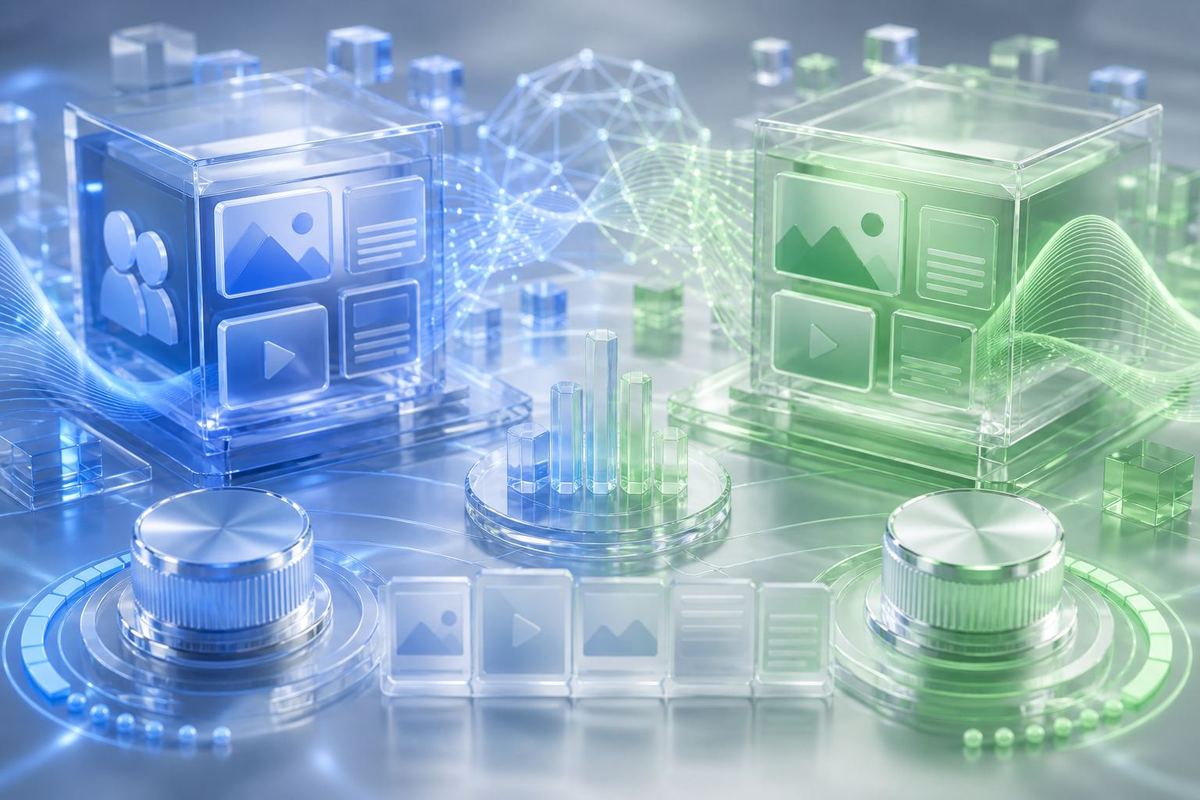
Meta Ads and Google Ads are increasingly using machine learning and automation to optimize targeting, placements, bidding, and campaign delivery. In 2026, advertisers should focus less on manually controlling every setting and more on strong creative, accurate conversion tracking, quality landing pages, useful customer signals, and continuous testing.
Paid advertising is becoming increasingly algorithmic. This changes the role of the performance marketer. Instead of manually adjusting every audience and placement, marketers need to provide better inputs to advertising systems.
Better Creative
Creative is becoming one of the strongest differentiators. Businesses should test hooks, images, videos, headlines, offers, CTAs, testimonials, and product demonstrations.
Better Conversion Tracking
If the platform receives poor or incomplete conversion signals, optimization becomes more difficult. Businesses should therefore pay close attention to Google Analytics, conversion tracking, CRM integration, lead quality, purchase events, and attribution.
Better Landing Pages
A great advertisement cannot compensate for a poor website experience. The ad and landing page should have message consistency:
Ad Promise → Landing Page Promise → Offer → Proof → CTA
Nexus Insight: The future of paid advertising is less about manually controlling every campaign setting and more about supplying advertising algorithms with high-quality creative, conversion signals, and customer data.
11. Conversion Rate Optimization Will Become More Important
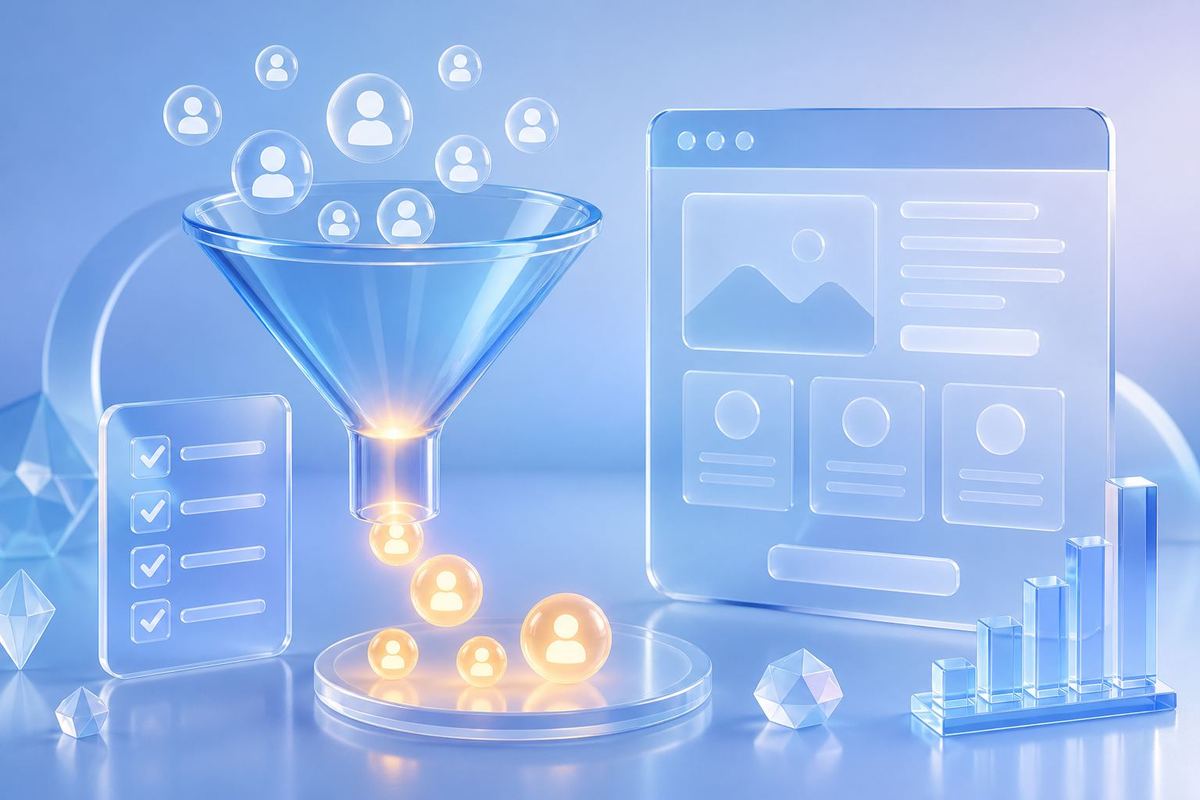
Conversion Rate Optimization (CRO) will become increasingly important because acquiring traffic is only part of digital marketing performance. Businesses need websites that turn visitors into leads, customers, bookings, or subscribers through stronger UX, clearer messaging, compelling offers, trust signals, fast performance, and frictionless conversion paths.
Imagine two businesses spend the same amount on advertising.
Business A gets: 10,000 visitors → 100 leads
Business B gets: 10,000 visitors → 300 leads
The second business can generate three times as many leads without necessarily increasing traffic. That is the power of CRO.
Key CRO Areas
A conversion-focused website should optimize headline clarity, CTA placement, mobile experience, page speed, forms, navigation, trust signals, testimonials, pricing communication, visual hierarchy, and checkout process.
UI/UX and Marketing Must Work Together
Beautiful design alone does not guarantee conversions. Effective UI/UX should support business objectives. Every important page should answer:
- What is this?
- Why should I care?
- Why should I trust you?
- What should I do next?
Nexus Insight: More traffic does not automatically mean more revenue; better digital experiences can increase the value of the traffic a business already has.
12. First-Party Data and Privacy-First Marketing
First-party data will become increasingly valuable as businesses seek more reliable customer insights and greater control over their marketing relationships. Brands should build permission-based customer databases through websites, CRM systems, email, loyalty programs, and direct communication while maintaining transparent privacy practices.
Businesses should not depend entirely on rented audiences. Social platforms and advertising systems can change. Algorithms can change. Costs can change. But an owned customer relationship is an important long-term asset.
Businesses can build first-party data through email subscriptions, customer accounts, purchases, CRM systems, loyalty programs, website interactions, and customer feedback.
The objective is not simply collecting more data. It is collecting useful, permission-based data and using it responsibly.
Nexus Insight: First-party data transforms marketing from repeatedly buying attention into building long-term customer relationships.
13. Personalization Will Move From Basic to Predictive
Personalization in 2026 is moving beyond simply inserting a customer’s name into an email. AI enables businesses to adapt recommendations, offers, content, messaging, and customer journeys based on behavior, intent, purchase history, and context, creating more relevant experiences across websites, advertising, email, and conversational channels.
Compare “Hi Sarah, check out our products.” with “Based on your previous purchase, here are three products designed to complement it.” The second approach is more contextually relevant.
AI can help identify patterns in browsing behavior, purchase history, content engagement, search intent, and customer lifecycle stage. However, personalization should not feel intrusive. The best personalization is useful, timely, and relevant.
14. AI + Human Expertise Will Beat Generic AI Content
Businesses should not replace expert content with mass-produced AI text. The strongest digital marketing strategy in 2026 combines AI efficiency with human expertise, original insights, real examples, professional experience, credible sources, and editorial oversight. This approach supports stronger E-E-A-T signals and creates content that is more useful to both customers and search systems.
AI makes content production easier. That also creates a problem: the internet is becoming saturated with generic content.
Publishing another 2,000-word AI-generated article is not necessarily a competitive advantage. Businesses need differentiation from original research, case studies, expert opinions, real campaign insights, screenshots, data, customer examples, first-hand experience, and unique frameworks.
For a digital marketing agency, for example, instead of writing “Social media is important for businesses.” a stronger article could explain “How we structure a Meta Ads funnel for local service businesses.” That demonstrates expertise.
Nexus Insight: AI can accelerate content production, but genuine expertise, evidence, experience, and original thinking create the authority that generic AI content cannot easily replicate.
15. What Should Businesses Do in 2026?
Businesses should build an integrated digital marketing strategy rather than chasing individual trends. The strongest approach combines technical SEO, AEO/GEO content, AI-assisted marketing, social media, performance advertising, CRO, first-party data, short-form video, localized content, and continuous measurement.
A practical 2026 marketing framework is:
Step 1: Strengthen Your Website
Make sure your website is fast, mobile-friendly, secure, easy to navigate, conversion-focused, and professionally designed.
Step 2: Build Search Visibility
Use SEO, AEO, GEO, local SEO, topic clusters, FAQ content, and expert-led articles.
Step 3: Improve Paid Advertising
Test Meta Ads, Google Ads, retargeting, video advertising, lead-generation campaigns, and e-commerce campaigns.
Step 4: Create Better Content
Prioritize educational videos, expert articles, case studies, tutorials, customer stories, and original research.
Step 5: Measure Business Results
Do not focus exclusively on likes, followers, and impressions. Track leads, sales, CAC, ROAS, conversion rate, revenue, and customer lifetime value.
Nexus Insight: A successful 2026 strategy connects visibility, traffic, experience, conversion, and retention rather than treating SEO, social media, advertising, and web design as separate activities.
Want help turning these trends into a growth system? Book a free discovery call with Nexus Digital Marketing.
Frequently Asked Questions About Digital Marketing Trends 2026
What are the biggest digital marketing trends in 2026?
Answer: The biggest Digital Marketing Trends 2026 include AI-powered search, AEO and GEO, AI-driven automation, social search, short-form video, social commerce, personalization, first-party data, automated paid advertising, conversion rate optimization, and expert-led content. Businesses should prepare for a marketing environment where customers discover brands through multiple search, social, AI, and conversational channels.
How is AI changing digital marketing in 2026?
Answer: AI is changing digital marketing by automating campaign analysis, content production, customer segmentation, personalization, reporting, creative testing, lead scoring, and customer interactions. AI is also changing how consumers search for products and services, making AI-search visibility increasingly important for businesses. The most effective approach combines AI automation with human strategy and expertise.
What is AEO in digital marketing?
Answer: AEO, or Answer Engine Optimization, is the practice of structuring online content so that search engines and answer engines can understand and extract direct answers to user questions. AEO uses concise answers, question-based headings, structured content, factual information, and clear explanations. AEO complements traditional SEO rather than completely replacing it.
What is GEO in digital marketing?
Answer: GEO, or Generative Engine Optimization, focuses on improving a brand's visibility within AI-generated search and recommendation experiences. GEO involves creating authoritative, structured, factual, entity-rich content that generative AI systems can understand, summarize, and potentially reference. GEO is becoming increasingly relevant as AI-powered search expands globally.
Will SEO still matter in 2026?
Answer: Yes. SEO remains important, but the definition of search visibility is expanding. Businesses now need to optimize for traditional search results, AI Overviews, AI Mode, conversational queries, featured answers, local search, social discovery, and other emerging search experiences. Google continues to send billions of clicks to websites and reported that overall organic click volume remained relatively stable year over year in its 2025 analysis.
Are Google Ads still effective in 2026?
Answer: Yes. Google Ads remains an important performance marketing channel, particularly when campaigns are supported by accurate conversion tracking, strong creative, relevant landing pages, quality offers, and continuous optimization. Automation is increasingly important, so advertisers should focus on feeding platforms reliable conversion signals and high-quality assets.
Are Meta Ads still effective in 2026?
Answer: Yes. Meta Ads remain valuable for businesses that can produce strong creative and accurately measure conversions. Successful campaigns increasingly depend on creative testing, audience signals, conversion quality, compelling offers, and optimized landing pages rather than relying solely on manually defined audiences.
How can small businesses compete in 2026?
Answer: Small businesses can compete by focusing on a specific niche, creating authoritative content, optimizing local and AI search visibility, building strong social proof, using targeted paid advertising, and improving website conversion rates. Smaller brands can often compete effectively by being more specialized, responsive, and authentic.
What digital marketing strategy is best for e-commerce in 2026?
Answer: An effective e-commerce strategy combines AI-powered product discovery, SEO, social commerce, short-form video, creator content, Google and Meta advertising, personalized experiences, conversion optimization, first-party data, and retention marketing. Businesses should connect discovery, product education, purchase, and customer retention into one measurable journey.
Conclusion: The Future Belongs to Adaptive Marketers
The future of digital marketing belongs to businesses that can adapt quickly while maintaining strong fundamentals. AI, search, social media, advertising, UX, automation, and personalization are converging into one connected customer journey. Businesses that invest in expertise, useful content, strong digital experiences, and measurable marketing systems can build a stronger competitive advantage in 2026 and beyond.
The biggest lesson from the Digital Marketing Trends 2026 landscape is simple:
Marketing is becoming more intelligent, but trust is becoming more valuable.
AI can generate content. AI can analyze data. AI can automate campaigns. AI can personalize experiences. But customers still want trust, proof, expertise, great experiences, and real value.
For businesses targeting competitive markets such as the USA, UAE, Canada, Australia, Germany, Europe, and Asia, the opportunity is enormous—but competition is increasing at the same time.
The brands that win will not necessarily be the brands that publish the most content. They will be the brands that create the most useful, credible, discoverable, and conversion-focused digital experiences.
At Nexus Digital Marketing, the focus is bigger than simply “getting traffic.” The real objective is to build a complete digital growth system:
SEO + AEO + GEO + AI + Social Media + Meta Ads + Google Ads + UI/UX + CRO + Data
When these elements work together, marketing becomes more than visibility. It becomes a measurable growth engine.

Ready to Build Your 2026 Digital Growth Strategy?
Whether your goal is to generate more leads, improve your website, increase e-commerce sales, strengthen your search visibility, or scale paid advertising, a customized strategy can help turn digital attention into measurable business results.
Explore Nexus solutionsYour next customer is already searching. The question is whether they will find your business—or your competitor.